Bombay High Court

About
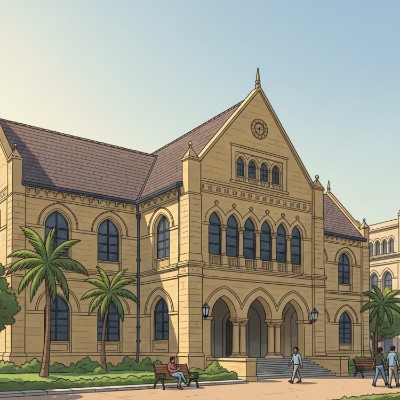
Bombay High Court, located in the heart of Mumbai, is one of India’s oldest and most iconic judicial edifices. Established in 1862, it stands as a remarkable example of Gothic Revival architecture, attracting not only law enthusiasts but also history buffs, photographers, and tourists exploring Mumbai’s colonial heritage. The High Court complex features majestic facades, pointed arches, and detailed stone carvings that showcase the architectural grandeur of the 19th century. Visitors can marvel at the tall towers, sprawling courtyards, and intricately designed interiors that reflect both elegance and historical significance.

Highlights of Bombay High Court:
  • Constructed in 1862 and operational since then, making it one of India’s oldest high courts
  • Designed in Gothic Revival style with pointed arches, ornate columns, and detailed stonework
  • Houses multiple courtrooms, chambers, and administrative offices, still in active use
  • Located in the historic Fort district, surrounded by other heritage landmarks
  • Photogenic interiors with high ceilings, wooden paneling, and intricate railings
  • Serves as a cultural and legal symbol of Mumbai, reflecting British-era architecture and judicial legacy
Walking through the premises of Bombay High Court, visitors experience a mix of history, architecture, and civic importance. The High Court remains a working judicial center, yet its aesthetic appeal draws countless tourists every year. From photography enthusiasts capturing the Gothic spires to history lovers tracing the evolution of India’s legal system, the site offers an enriching experience. Guided tours, though limited, help visitors understand the significance of each courtroom and the architectural intricacies. With nearby attractions like Gateway of India and Chhatrapati Shivaji Maharaj Terminus, a visit to Bombay High Court perfectly complements a heritage tour of Mumbai.

History

Bombay High Court, a historic Mumbai landmark, was commissioned during the British colonial era to serve as the principal judicial institution of the region. Its establishment marked a significant development in India’s legal history, reflecting both administrative foresight and architectural grandeur.

Key highlights:

  • Commissioned in 1862 to serve as the principal high court of Mumbai and the surrounding region
  • Designed by British architects in Gothic Revival style, blending Victorian and traditional European elements
  • Construction materials included imported stone and locally sourced materials to ensure durability
  • Served as a symbol of colonial legal authority and continues to operate as a judicial hub
  • Witnessed numerous landmark cases and judicial reforms that shaped Indian legal history
  • Surrounded by other colonial-era buildings in the Fort district, creating a heritage precinct


Facts & Figures

Bombay High Court is not only an architectural marvel but also a hub of India’s legal system, drawing visitors interested in history, architecture, and civic heritage.

Key facts and figures:

  • Established in 1862, making it one of the oldest high courts in India
  • Designed in Gothic Revival style with pointed arches, vaulted ceilings, and detailed stone carvings
  • Sprawling area of approximately 22,000 sq ft for main building and surrounding courtyards
  • Houses over 20 courtrooms along with administrative offices
  • Constructed using a mix of imported stones and local materials for durability
  • Receives thousands of visitors annually, including law students, tourists, and photographers
  • Located at Fort, Mumbai, part of a heritage precinct with other colonial-era landmarks


Current Scenario

Bombay High Court continues to function as one of India’s most important judicial institutions while also attracting tourists, historians, and architecture enthusiasts. The building is well-maintained, reflecting both its heritage value and operational significance.

Current highlights:

  • Active functioning high court with ongoing judicial proceedings
  • Regular maintenance and conservation efforts preserve the Gothic Revival architecture
  • Moderate visitor crowd; popular among photographers and heritage enthusiasts
  • Occasional guided heritage walks organized by local tourism bodies
  • Located near key Mumbai attractions, enhancing its accessibility for tourists
  • Security protocols are strictly enforced due to active court operations


Best Time to Visit

Visiting Bombay High Court can be a delightful experience throughout the year, but certain months are more comfortable due to Mumbai’s tropical climate.

Best time highlights:

  • October to February – Pleasant weather, ideal for sightseeing and photography
  • March to May – Hot summer months; outdoor visits can be tiring, but indoor architecture remains enjoyable
  • June to September – Monsoon season; heavy rains can affect travel, but the lush surroundings look scenic
  • Festivals like Diwali and Ganesh Chaturthi add cultural vibrance to nearby areas
  • Early mornings are ideal for minimal crowds and capturing heritage architecture
0410
Timings & Entry Fees

Bombay High Court is a working judicial complex, so visitors should plan their trip considering court hours and security protocols. Entry is generally allowed for sightseeing and photography in designated areas.

Key information:

  • Visiting hours: Monday to Friday, 10:00 AM to 5:00 PM
  • Closed on weekends and public holidays
  • Entry fee: Free for all visitors
  • Photography allowed in designated areas; prior permission may be required for professional shoots
  • Visitors must carry valid ID and follow security checks

    Note: Timings and entry protocols may change; please check official sources or contact the High Court before visiting


How to Reach

Bombay High Court is centrally located in the historic Fort district of Mumbai, making it easily accessible via multiple modes of transport.

Transport options:

  • By Air – Nearest airport is Chhatrapati Shivaji Maharaj International Airport (~25 km). From the airport, taxis or app-based cabs are recommended
  • By Train – Nearest railway station is Chhatrapati Shivaji Maharaj Terminus (CSMT) (~1.5 km). Accessible via short taxi or auto-rickshaw rides
  • By Road / Metro – Well connected via local buses, taxis, and metro. Nearest metro station is Chhatrapati Shivaji Maharaj Terminus Metro. Landmarks like Gateway of India can be used as reference points
  • Walking tours from nearby heritage sites are feasible due to its central location
  • Parking may be limited; using public transport is recommended for tourists


Tips & Hacks

Visiting Bombay High Court can be more enjoyable if you follow some practical tips and local hacks to make the most of your heritage tour.

Tips and hacks:

  • Visit early in the morning to avoid crowds and capture better photographs
  • Carry valid ID as security checks are strict
  • Photography allowed only in designated areas; seek permission for professional shoots
  • Wear comfortable shoes as walking around the premises is required
  • Use public transport or taxis; parking near Fort district is limited
  • Combine visit with nearby attractions like Gateway of India or Chhatrapati Shivaji Maharaj Terminus for a heritage walk
  • Respect court proceedings and avoid entering active courtrooms without permission
  • Check weather conditions, especially during monsoon, for a comfortable visit


Recommendations for Tourists

A visit to Bombay High Court can be enriching for both local and international tourists, offering insights into India’s judicial heritage and colonial architecture.

Recommendations:

  • Local Tourists – Explore the High Court early in the day to avoid crowd; combine with nearby heritage sites for a full-day walking tour
  • International Tourists – Consider hiring a local guide to understand historical context and architectural nuances
  • Include a short stop at Fort district landmarks to capture photographs of Victorian-era architecture
  • Plan 1–2 hours for an in-depth visit, focusing on facades, courtyards, and interiors
  • Carry a camera and wear comfortable shoes for exploring the premises
  • Optionally, schedule visit around local festivals for added cultural experience
0810
Food Courts / Food Options Nearby

Visitors to Bombay High Court can enjoy a variety of food options in the surrounding Fort district of Mumbai, ranging from street food to mid-range eateries.

Food options:

  • Leopold Cafe – Multi-cuisine, approximate cost ₹800/person
  • Café Mondegar – Continental & Indian snacks, approximate cost ₹500/person
  • Britannia & Co. – Parsi cuisine, approximate cost ₹700/person
  • Swati Snacks – Local Gujarati street food, approximate cost ₹250/person
  • Prakash Sandwich – Quick bites, approximate cost ₹150/person
  • Must-try: Berry Pulao at Britannia & Co. (~₹700) and Pav Bhaji at street vendors (~₹100)
  • Many cafes provide both budget-friendly and mid-range dining options


Additional Notes

Bombay High Court is not only a working judicial institution but also a cultural and historical icon in Mumbai. Visitors often enjoy:

  • Capturing the Gothic Revival architecture from different angles
  • Exploring nearby colonial-era buildings and streets for a full heritage experience
  • Learning about India’s legal history and landmark cases
  • Photography tips: early morning or late afternoon provides soft lighting for facades
  • Observing local court routines and the disciplined atmosphere for cultural insight
  • Combining the visit with walking tours of Fort district for a richer exploration
1789


Places Nearby Bombay High Court
Frequently Asked Questions
Q1: What is the entry fee for the Bombay High Court?
A1: Entry to the Bombay High Court in Mumbai is completely free for all visitors.
Q2: What are the visiting hours for the Bombay High Court in Mumbai?
A2: The Bombay High Court in Mumbai is open for visitors from Monday to Friday, 10:00 AM to 5:00 PM and is closed on weekends and public holidays.
Q3: Is photography allowed inside the Bombay High Court?
A3: Photography is allowed in designated areas of the Bombay High Court in Mumbai, but prior permission may be required for professional shoots.
Q4: What is the best time to visit the Bombay High Court in Mumbai?
A4: The best time to visit the Bombay High Court in Mumbai is from October to February when the weather is pleasant for sightseeing and photography.
Q5: Are there any security checks for visitors at the Bombay High Court?
A5: Yes, visitors to the Bombay High Court in Mumbai must undergo security checks and carry a valid ID for entry.
Q6: Can tourists enter the courtrooms of the Bombay High Court?
A6: Tourists are generally not allowed to enter active courtrooms of the Bombay High Court in Mumbai without prior permission.
Q7: Which nearby attractions can be visited along with the Bombay High Court?
A7: Nearby attractions to the Bombay High Court in Mumbai include Gateway of India, Chhatrapati Shivaji Maharaj Terminus, Flora Fountain, and Rajabai Clock Tower.
Q8: Is the Bombay High Court accessible for differently-abled visitors?
A8: Yes, the Bombay High Court in Mumbai has ramps and accessible pathways, but some areas may have limited access due to heritage architecture.
Q9: Is there a guided tour available for the Bombay High Court?
A9: Occasionally, guided heritage tours are organized at the Bombay High Court in Mumbai by local tourism bodies to explain its history and architecture.
Q10: How much time should a visitor plan for the Bombay High Court tour?
A10: Visitors typically spend 1–2 hours exploring the Bombay High Court in Mumbai, including the facades, courtyards, and designated interiors.
Q11: Are there any photography restrictions at the Bombay High Court?
A11: Yes, at the Bombay High Court in Mumbai, photography is restricted to designated areas, and professional photography may require prior permission.
Q12: Can children visit the Bombay High Court in Mumbai?
A12: Yes, children can visit the Bombay High Court in Mumbai, but they must be accompanied by adults and follow security guidelines.
Q13: Is there any cost for guided tours at the Bombay High Court?
A13: Guided tours at the Bombay High Court in Mumbai are usually free when organized by local heritage groups, but some private tours may charge a nominal fee.
Q14: Are there any nearby food options when visiting the Bombay High Court?
A14: Yes, the Fort district near the Bombay High Court in Mumbai has many food options, including Leopold Cafe, Café Mondegar, and street food stalls.
Q15: Is it safe to visit the Bombay High Court during monsoon season?
A15: Yes, it is generally safe to visit the Bombay High Court in Mumbai during monsoon, but visitors should carry umbrellas and wear non-slip footwear due to wet surfaces.